Showing posts with label timkeller. Show all posts

10/04/2014

Gospel Righteousness

In Romans so far, we considered:
  1. Gospel of Grace (Rom 1:1-6).
  2. Gospel Enthusiasm (Rom 1:7-15).
  3. Gospel Power (Rom 1:16).
  4. Gospel Righteousness (Rom 1:17) is next.
What does Paul mean by the righteousness of God? There are three options.
  1. An attribute of God, the righteousness that characterizes God. This righteousness may be either (a) God's justice (Rom 3:5, 25-26), according to which he always does what is right, or (b) God's faithfulness, according to which he fulfills his covenant promises to his people.
  2. A status or position that God bestows on those who believe. It is therefore a righteousness that comes from God. Martin Luther gave eloquent expression to this view in the 16th century. Luther concluded that the righteousness of God that is revealed in the gospel is a gift of God given to sinners through faith. This righteousness is purely forensic or legal. It is a matter of our judicial standing before God, not our internal or moral transformation. Thus, Luther's view is that Paul refers here to the righteous status that comes from God in the gospel through faith.
  3. An activity of God. The righteousness of God is God's action of intervening on behalf of his people to save and deliver them. This idea has strong support from the OT (Isa 46:13; 50:5-8; Mic 7:9).

4/06/2014

Jesus In All The Scriptures


Luke 24:1-53 (Read Lk 24:25-32, 44-48); Key Verse: Lk 24:27, 44

"And beginning with Moses and all the Prophets, he explained to them what was said in all the Scriptures concerning himself." “This is what I told you while I was still with you: Everything must be fulfilled that is written about me in the Law of Moses, the Prophets and the Psalms.”

Change the world. In the movie trailer of The Son of God, Jesus meets Peter, got into his fishing boat and helped him experience a miraculous catch of fish. Surprised, Peter asked, "How did this happen?" Then Jesus called him to be his disciple and said, "Come with me." Peter asked, "What are we going to do?" Jesus said matter of factly, "Change the world."

Indeed, Jesus changed world history. How was this possible? Secular historians (and not just Christian historians) say there is a reason. Within a few centuries world history changed from a pagan society based on classical Greco-Roman culture to Christianity. It was because of the resurrection of Christ. This sermon will consider how the resurrection changes the world.

9/24/2013

Half Faith is No Faith (Judges 17-18)


"Judges For You" (by Tim Keller) has helped me share gospel lessons from the book:
  • Faithful But Flawed (Judg 1:1-2:5),
  • Gideon (Judg 6:1-8:35), who starts well and ends badly, and
  • Samson (Judg 13:1-16:31), the womanizer and sex addict whom God choose from birth.
They teach us:

  • how compromise always devastates us,
  • how success often leads to pride and makes us worse, and
  • how God bears with our fallen humanity and depravity---only by his grace.
The last 5 chapters are particularly graphically brutal, violent and bleak---so much so that they are hardly ever taught in church or preached on. It shows the reality of a life without God, even though the people act and behave religiously, and even call on God's name. But it is everyone doing "as they saw fit" (Judg 17:6; 21:25).

9/17/2013

Faithful But Flawed (Judges 1:1-2:5)


"Judges For You" by Tim Keller is a small, short (217 pages), succinct and well written Bible study guide. I have blogged briefly on Gideon, Samson and the six key themes of Judges. This is an overview of chapter 1 of the book: Half-Hearted Discipleship (Judg 1:1-2:5). It shows how the people were faithful yet flawed; they were committed (to God), yet given to compromise, convenience, and common sense.

Radical risk-taking discipleship requires faith and obedience. Judges begins after the death of Joshua (Judg 1:1)--Moses' God-chosen successor to lead the people of Israel (Num 27:12-23). As recorded in the book of Joshua, God kept his promises to them, brought them into the promised land, defeated their enemies and began to give them blessing and rest. The gist of the book of Joshua is that since God always keeps his promise, God's people can bravely obey and worship him. Briefly, God's people are to 1) believe God's promise (Josh 1:3-4) and obey God's word (Josh 1:7-8; 23:5-6), which they should continue to do. God's call to his people (then and now) is to combine spirituality with bravery. True discipleship is radical and risk-taking. Judges records how they fared.

Questions:

9/10/2013

Samson: How God Used A Womanizer (Judges 13-16)


Samson's story has many Hollywood themes: illicit sex, graphic violence, revenge, death and a Rambo style hero. But his story is perplexing. He was conceived miraculously, chosen by God, set apart to serve him from birth, blessed by God and empowered by his Spirit. Yet, he may be the most flawed character in Judges. He is violent, impulsive, sexually addicted, emotionally immature and selfish. Most troubling of all, the "Spirit of God" seems to anoint him and use his worst sins for God's purpose--especially his sexual addiction and violent temper. How can such a person ever be called and chosen by God to fulfill his purpose of redemption?

9/02/2013

Bad to Worse; Grace to Retribution (Judges 6-8)


Judges is downright disturbing and depressing to read and reflect. It is about despicable people doing deplorable things. Even the "heroes" (judges) are flawed increasingly throughout Judges, doing many appalling things. It is a dismal story...that points to and finds resolution only in the Gospel. In "Judges For You," Tim Keller identifies 6 main themes.

This post addresses elements--both good (initially) and bad (eventually and progressively)--in the story of Gideon (Judg 6:1-8:35), a "hero"/judge who starts out extremely well with the grace of God, but who then gets worse and ends horribly by displaying the overweening pride and arrogance of spectacular success.

8/29/2013

Judges: God Gives Grace Even As We Deteriorate From Bad to Worse


Tim Keller identifies six key themes/truths about God in his new book "Judges For You":

  1. God relentlessly offers his grace to people who do not deserve it, seek it, or even appreciate it after they've been saved by it.
  2. God wants lordship over every area of our lives, not just some.
  3. There is a tension between grace and law, between conditionality and unconditionality.
  4. There is a need for continual spiritual renewal in our lives here on earth, and a way to make that a reality.
  5. We need a true Savior, to which all human saviors point, through their flaws and strengths.
  6. God is in charge, no matter what it looks like.
Grace is a major theme if not the singular most important theme throughout the Bible, both OT and NT. Judges is no exception. The people and their sins get worse and worse throughout the book. The judges (saviors/deliverers) are less and less admirable with each new judge. Yet God gives grace and never gives up.

8/09/2011

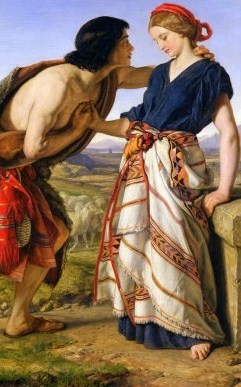
The Search For One TRUE LOVE (Gen 29:15-35)


"...the Lord saw that Leah was not loved..." (Gen 29:31).

Theme: Those who have an inner vacuum and emptiness give themselves to a hope---a hope for 1 true love.

"The Titanic" was a mega hit in 1997 partly because every girl in the world wishes to have her own Leonardo DiCaprio, who sacrificed himself to the freezing ocean out of his undying love for his 1 true love. Many a girl wishes that her "heart will go on" forever because of a true love that never dies. Because of the undying desire for 1 true love that never diminishes through out life, James Cameron made $1.8 billion with his own personal share of $100 million. We agree with the Beatles that "All you need is love."

The Bible is utterly realistic about how hard it is to not be married (thus "not loved"), and how hard it is to be married (somehow the love is not enough). Outside the church people are cynical about marriage. Inside the church people think that family values are what life is all about. The Bible says both these attitudes are wrong. The Bible does not hold up marriage as what one needs to have a fulfilled life. Rather, it points us to a person, to Jesus, the ultimate source of our deepest fulfillment.

There is a fascinating account of Jacob's search for 1 true love. He gave himself to a singular hope--a hope for 1 true love. We learn 3 things about man's quest for 1 true love:
  1. What’s behind the hope (What is behind that hope for 1 true love)
  2. The disillusionment that generally accompanies that hope for 1 true love
  3. What will actually/ultimately fulfill that hope (the hope for 1 true love)
I. The Hope Behind 1 True Love (There is an overpowering human drive in every person to find 1 true love)

This text begins with Laban asking Jacob what wages he would like (Gen 29:15). Jacob had to flee from home. He had deceived his father Isaac to give him the blessing of the firstborn that belonged to Esau, his older twin. Thus, Esau wanted to kill him. Jacob had no choice but to travel a month's journey to his uncle Laban, his mother's brother.

Laban, a shrewd businessman, realized Jacob's tremendous ability as a good worker and manager. He figured that he could make a lot of money if Jacob cared for his flocks. So he asked how he would pay Jacob (Gen 29:15). Jacob's answer was simple: "Rachel, my 1 true love!" She was Laban's absolutely stunningly gorgeous younger daughter (Gen 29:16), with "a lovely figure and was beautiful" (Gen 29:17). Robert Altar, the great Hebrew literature scholar at Berkeley, says that there are all sorts of signals in the text about how over-the-top, intensely lovesick and overwhelmed Jacob is with Rachel. Upon meeting her, he showed off his strength, kissed her and wept aloud (Gen 29:10-11). He agreed to work 7 years for her (Gen 29:18). "So Jacob served seven years to get Rachel, but they seemed like only a few days to him because of his love for her" (Gen 29:20). After 7 years, Jacob demanded, “Give me my wife. My time is completed, and I want to make love to her" (Gen 29:21). In the Hebrew, this statement is so bald, so graphic, so sexual, so over-the-top, inappropriate and non-customary. The narrator is showing us a man driven by and overwhelmed with emotional and sexual longing for 1 woman. Why?

Jacob's life was empty. He never had his father's love. Now he didn't have his mother's love. Though he had met God (Gen 28:17), he had no sense of God's love. He'd lost everything -- no family, no inheritance, no nothing. Then he saw the most beautiful woman he had ever seen. He said to himself, "If I had her, finally something would be right with my lousy life. She will make my life right; she will fix everything that's wrong about my life." All of the longings of the human heart for significance, for security, for meaning--they were all fixed on Rachel.

Cultural historians say that in ancient times people married for status; they didn't marry for love, which is supposedly a relatively recent phenomenon. Our culture is begging us to load all of the deepest needs of our hearts for significance, security, and transcendence into romance and love, into finding that 1 true love. This will fix my lousy life! In most of the world today, people cannot imagine living without apocalyptic romance and love. This has been magnified to an astounding degree. Where does this lead?

II. The Devastation/Disillusionment that Accompanies the Hope for 1 True Love

Laban knew exactly what it meant when Jacob offered to serve 7 years for Rachel. At that time, to marry someone required a bride-price paid to the father (30-40 shekels). Robert Altar says a month's wages was 1 and a half shekels. Jacob offered 3-4 times the normal bride-price. Why? He was absolutely love struck, love sick. He wanted to show how much he loved her. Laban knew how vulnerable he was.

Commentators say that there are indications in the text that Laban immediately came up with a plan, realizing that he could get even more out of this deal. When Jacob proposed the 7 years (Gen 29:18) (the bride price he did not have), Laban never said, "Yes! Deal!" He said, It’s better that I give her to you than to some other man. Stay here with me (Gen 29:19). Jacob wanted to hear a yes, so he heard a yes. But Laban did not say yes.

7 years pass. Jacob says, "Give me my wife" (Gen 29:21). So Laban prepared a great feast (Gen 29:22). In the middle of the feast, the bride, heavily veiled, was given to him, and he took her into her tent. He was inebriated and in that dark tent, "Jacob made love to her" (Gen 29:23). But "when morning came, there was Leah!" (Gen 29:25a). Rightfully angry, Jacob said to Laban, “What is this you have done to me? I served you for Rachel, didn’t I? Why have you deceived me?" (Gen 29:25b). Laban nonchalantly responds, “It is not our custom here to give the younger daughter in marriage before the older one. Finish this daughter’s bridal week; then we will give you the younger one also, in return for another seven years of work" (Gen 29:26-27). Without a fight or protest, Jacob basically says, "Oh, OK" (Gen 29:28). Why?

Jacob was obviously absolutely angry, knowing he was thoroughly unfairly deceived. Why doesn't respond with righteous unrelenting indignation and wither Laban's cool exterior? Many devastating persuasive reasonable 'comebacks' are possible. But he didn't retaliate. He is unlike the usual "man of struggle and conflict" that he is. He also just caved in and agreed to another 7 years for Rachel without a fight. His indignation was absent. Why did Jacob quietly just give in?

1st, Laban said, "It's not our custom here..." (Gen 29:26). Robert Alter translates it, "It's is not done thus in our place..." Laban is an instrument of dramatic irony: his perfectly natural reference to "our place" has the effect of touching a nerve of guilty consciousness in Jacob, how in his place acted to put the younger "before the firstborn" (Gen 29:26, ESV), the word Laban used to refer to Leah. Those words must have been like a dagger in Jacob's heart. They could not fail to make Jacob think of what he did and set his guilty conscience on fire.

2nd, Jacob said, "Why have you deceived me?" (Gen 26:25) Here the word translated "deceived" is the same word Isaac used to describe Jacob to Esau (Gen 27:35). "It has been clearly recognized since late antiquity that the whole story of switched brides is a meting out of poetic justice to Jacob--the deceiver deceived, deprived by darkness of the sense of sight as his father is by blindness, relying, like his father, on the misleading sense of touch." (Robert Altar, Genesis, 1996, 155). The parallels are hard to miss. Jacob's deceit and Laban's deceit both entailed deception and exploitation of weaknesses and the switching of the 1st-born and 2nd-born.

Likely Jacob realized that Laban did to him what he had done to his father. In the dark, Jacob thought he was touching Rachel, as his father in the dark of his blindness had thought he was touching Esau. In an imaginary conversation the next day between Jacob and Leah, Jacob says to Leah, "I called out 'Rachel' in the dark and you answered. Why did you do that to me?" Leah says, "Your father called out Esau in the dark and you answered. Why did you do that to him?" Suddenly the evil Jacob has done comes back to him. Jacob sees what it is like to be manipulated and deceived, and meekly picks up and works another 7 years.

We see Jacob in his devastation, but what about Leah? Who is she? She is described variously as having eyes that are weak, tender, soft, delicate (Gen 29:17). The Hebrew word is ambiguous. Perhaps, she was cross-eyed. Likely, it was something unsightly. The point, however, is that she is particularly unattractive, in sharp contrast to her absolutely stunning sister. Laban knew that no one was ever going to marry her or offer any money for her. How was he going to get rid of her? How would he unload her? He found a way through Jacob who was completely vulnerable and love struck. Now the girl that Laban, her father, did not want was given to a husband who doesn't want her either. She is the girl nobody wants.

Leah has a hollow in her heart every bit as big as the hollow in Jacob's heart. She begins to do to Jacob what Jacob had done to Rachel and what Isaac had done to Esau: She set her heart on Jacob. The evil pathology in the family just ricochets around from generation to generation.

When Leah had her 1st 3 sons (Gen 29:32-34), what was she doing? She was trying to get an identity through traditional family values. In those days, having sons was the best way to do that. But it was not working. She set her heart, all of her hopes and dreams, on her husband, by giving him many sons. She thought, "If my husband loves me, it will fix my lousy life." Instead, she was just going down into hell. Gen 29:30 says, "his (Jacob's) love for Rachel was greater than his love for Leah." It meant that she was condemned every single day. Her hell was to see the man she most longed for in the arms of the one in whose shadow she has lived all of her life. Every day was like another knife in the heart.

What can we learn here?

1st, in the morning, it is always Leah! In all of life there runs a ground note of cosmic disappointment. Understand that life will always disappoint. Jacob says, "If I just get Rachel, everything will be OK." Like Jacob, whatever we set our hopes on--in the morning, it is always Leah! Why? Because the good things in the world that we desperately want (marriage, families, ministry) will never be able to do what we want them to do for us. If one puts weight on the person we are marrying, (the children we love, the ministry we desire), we are going to crush him or her. Hopefully, sooner rather than later, we KNOW that everything disappoints, and that there is a note of cosmic disappointment and disillusionment in everything, in all the things into which we most put our hopes. When we experience this, there are 4 things we can do:

  1. Blame the thing (The fool's way), drop it, get new and better ones.
  2. Blame yourself (The way of self-pity and despair). Beat yourself up. Hate yourself.
  3. Blame the world (The cynical way). This leads to ever increasing hardness.
  4. Realize the reality (God's way). In Mere Christianity, CS Lewis said, "If I find in myself a desire which no experience in the world can satisfy, the most probable explanation is that I was made for another world (something supernatural and eternal)."
2nd, liberalism and conservatism are wrong about romance, love and sex. Jacob was liberal, "Give me my wife! I want sex!" Leah was conservative. She is having babies. She is trying to find her identity in being a loving wife. They are both wrong. Their lives are a mess. Earnest Becker (Denial of Death, 1973, 166) says, "No human relationship can bear the burden of godhood... However much we may idealize and idolize him (the love partner), he inevitably reflects earthly decay and imperfection. And as he is our ideal measure of value, this imperfection falls back upon us." We are all seeking redemption, value, significance, meaning, validation through love, through our idols. It doesn't work. Yet we have this undying drive in us for 1 true love. What can we do?

III.  What can Fulfill the Hope for 1 True Love

See what God does in Leah and for Leah. She is the 1st person to get it. Scholars notice that even though she is clearly making a functional idol out of her husband and her family, she is calling on the Lord. She doesn't speak about God in some general way or invoke the name Elohim. She uses the name Yahweh in the birth of the 1st 2 sons (Gen 29:32-33).

Elohim was the generic word for God. The general idea of God in all cultures were gods at the top of the ladder. So we had to get up there through rituals, moral performance, transformations of consciousness. Everyone understood God in that sense. But Yahweh was different. Yahweh was the God who came down the ladder, the one who entered into a personal covenantal relationship and intervened to save. In Altar's translation of Genesis, Gen 28:13 says, "the Lord was poised over him." Likely Leah learned about Yahweh from Jacob. Even though she is still in the grip of her functional idolatry, somehow she is trying, she is calling out, she is reaching out to a God of grace. She has grasped the concept. Finally, with the birth of the 4th son, there is a breakthrough. She does not mention husband or child, but says boldly, “This time I will praise the LORD” (Gen 29:35). At that point, she has finally taken her heart's deepest hopes off of the old way, off of her husband and her children, and she has put them in the Lord.

Jacob and Laban had stolen Leah's life. She had given her heart to a good thing (husband, love, children) and turned it into an ultimate thing. The result was only heart break and more heart break. But when she gave her heart to the Lord, she got her life back. What good thing in your life are you treating as an ultimate thing? What do you need to stop giving your heart to in order to get your life back?

Something happened to Leah. She began to understand what you are supposed to do with your desire for 1 true love. She turned her heart toward the only real beauty, the only real lover who can satisfy those cosmic needs. God did something in her. There was a breakthrough. She sensed that God was doing something in her. The author of Genesis knows what God had done. It is the child Judah, through whom will come the King (Gen 49:10). God has come to the girl nobody wanted, the unloved, the unwanted, and made her the mother of Jesus! Leah is the mother of Jesus, not beautiful Rachel, but the homely one, the unwanted one, the unloved one. Why did God do that? Because of his person and his work.

1st, his person. "When the LORD saw that Leah was not loved, he enabled her to conceive" (Gen 29:31). God is saying, "I am the real bridegroom, the husband of the husbandless, the father of the fatherless." God is attracted to the people the world is not attracted to. He loves the unwanted, the unattractive, the weak, the ones the world doesn't want to be like. God says, "If nobody is going to be the spouse of Leah, I will be her spouse."

2nd, the gospel. Jesus came as the son of Leah. Jesus became the man nobody wanted. He was born in a manger. He had no beauty that we should desire him (Isa 53:2). He came to his own and they received him not (Jn 1:11). At the end, nobody wanted him. Everybody abandoned him. Even his Father didn't want him (Mt 27:46; Mk 15:34).

Why did Jesus become the man nobody wanted? For you and me! Here is the gospel: God did not save us in spite of the weaknesses that he experienced as a human being but through it. No one gets salvation through their strength; it is only for those who admit they are weak. If you cannot admit that you are a hopeless moral failure and a sinner and that you are absolutely lost and have no hope apart from the grace of God, then you are not weak enough for Leah and her son and the great salvation that God has brought into the world. God chose Leah because he is saying, "This is how salvation works." This is the upside down way. The way up is down. The way to become rich is to give your money away. The way to power is to serve. God came as the son of Leah because he choose the foolish things to shame the wise; he chooses the weak things to shame the strong (1 Cor 1:27-29).

Practical Applications:
  1. "Enjoy" the "Labans" in your life. Don't be bitter and beat them up. God can use them in your life to make you better if you don't become bitter.
  2. Enjoy rejection. God knows/cares for the rejected/betrayed. Jesus was rejected. God didn't just love Leah, but he actually became Leah, the son of Leah.
  3. Know/understand that in the morning, it will always be Leah. It will make you less desperate in your marriage-seeking, less angry with your spouse.
  4. You can't mess up your life. You can't screw up God's plan for you. Everyone has blown up/screwed up their life. Everybody sinned. Jesus is the "fruit" of everyone's sin. Jesus is not plan B.
The devastation and unhappiness and misery that happens in your life because of your sins are always your fault. You are responsible. You should repent. Yet God is going to work through you. These 2 things are together. This is an antimony, a paradox. It's never too late for God to work in your life. Start over now. Like Leah, say, "This time I will praise the Lord."

This is based on a sermon by Tim Keller, "The Girl Nobody Wanted," published in Heralds of the King, 53-72.

Genesis Study Guide by Tim Keller: What were we put in the world to do? 191-201.

The Girl Nobody Wanted (Gen 29:15-35)
  1. What might Laban know about Jacob (Gen 29:10-14)? Why was the motivation of Laban and Jacob (Gen 29:15-20)?  In what ways is Laban's scheme ingenious, though cruel (Gen 29:21-26)? What did Laban gain?
  2. Though Jacob was shocked and furious (Gen 29:25), why did he agree so compliantly to Laban's explanation and further offer (Gen 29:26-30)? How was Laban's deceit with Jacob parallel to Jacob's deceit with his family?
  3. How does the affirmation of Gen 28:13-15 and the discipline of Gen 29:15-30 work together for Jacob's good (Heb 12:5-6; Prov 3:12; Amos 3:2; Gen 50:20)?
  4. Identify the idols of Jacob (Gen 29:18,20,30), Leah (Gen 29:32-34), Rachel (Gen 30:1,8). How does God deal with the lovelessness of Leah (Gen 29:31) and the barrenness of Rachel (Gen 30:22-24)? What does this tell us about God's salvation (Isa 53:2; Jn 1:11; Mt 27:46; Mk 15:34; 1 Cor 1: 27-29)?

4/07/2011

JONAH

Jonahwhale
"(Jonah is) probably the best known yet least understood book in the Bible." Ray Stedman

"The story of Jonah the prophet swallowed by the giant fish is simple enough to delight a child and complex enough to confound a scholar." Janet Howe Gaines

"(Jonah) is a subtly crafted narrative about the idols that drive our actions on many levels and pull us farther from God even when we think we are doing (God's) will." Tim Keller, Counterfeit Gods, 133

"It is one thing to know the doctrine of salvation by grace, and quite another to know the grace of the doctrine of salvation. This is the lesson of Jonah, the prophet who knew God's grace but was challenged by God inwardly to embrace it." Richard Phillips, Jonah & Micah, 3

"(Jonah) is really a book about ... how one man came, through painful experience, to discover the true character of the God whom he had already served in the earlier years of his life. He was to find the doctrine about God (with which he had long been familiar) come alive in his experience." Sinclair Ferguson, Man Overboard! The Story of Jonah, 2008, xi

4/05/2011

18) The Beginning (Mark 15:37-16:7)

"The resurrection was as inconceivable for the 1st disciples, as impossible for them to believe, as it is for many of us today. The people of Jesus' day were not predisposed to believe in resurrection any more than we are." 216

"If you can't dance and you long to dance, in the resurrection you'll dance perfectly. If you're lonely, in the resurrection you will have perfect love. If you're empty, in the resurrection you will be fully satisfied." 223

Intro: In every messianic movement in Israel, the messianic leader was killed and the movement collapsed. But after Jesus' death, Christianity spread through the entire Roman empire in 300 years. What caused the explosive growth in Christianity after its founder's death?

4/03/2011

17) The End (Mark 14:53-15:39)

Mk15
"Christianity is the only religious faith that says that God himself actually suffered, actually cried out in suffering." Tim Keller, King's Cross, 208


"If you see Jesus losing the infinite love of his Father out of his infinite love for you, it will melt your hardness." 210

"Spiritual darkness comes when we turn away from God as our true light and make something else the center of our life." 203

"When you are in spiritual darkness, although you may feel your life is headed in the right direction, you are actually profoundly disoriented." 203

"Also, if you center on anything but God, you suffer a loss of identity. Your identity will be fragile and insecure... It's based on human approval. It's based on how well you perform. You don't really know who you are. In the darkness you can't see yourself." 204

3/24/2011

16) The Sword (Mark 14:43-52)

Mk14
Quotes: “The pattern of the Cross means that the world’s glorification of power, might, and status (the sword) is exposed and defeated. On the Cross Christ wins through losing, triumphs through defeat, achieves power through weakness and service, comes to wealth via giving all away. Jesus Christ turns the values of the world upside down.” Tim Keller, The Reason for God, 2008, 196

"On the cross, Jesus is getting what we deserve so we can get what he deserves. When we see that this great reversal is for you...it changes you." (191) "Jesus is not a revolutionary you can stop with swords, because he's not about the sword at all." (188) Judas didn't get it. Neither did his own disciples (Mark 14:47).

"An ethical system based on honor is a self-regarding ethic, while one based in charity is an other-regarding ethic... With honor goes a concentration on pride rather than humility, dominance rather than service, courage rather than peaceableness, glory rather than modesty, loyalty rather than respect for all, generosity to one's friends rather than equality." C. John Summerville, professor emeritus of history (184).

3/21/2011

15) The Cup (Mark 14:32-36)

Mk14

"God is the source of all love, all life, all light, all coherence. Therefore (Jesus') exclusion from God (on the cross) is exclusion from the source of all light, all love, all coherence. Jesus began to experience the spiritual, cosmic, infinite disintegration (in the garden of Gethsemane) that would happen when he became separated from his Father on the cross. Jesus began to experience merely a foretaste of that, and he staggered." (176)


"As horrible as the cup (of suffering) is, (Jesus) knows that his immediate desire (to be spared) must bow before his ultimate desire (to spare us). (180)

"Instead of perpetually denying your desires or changing your circumstances, you'll be able to trust the Father in your suffering." (181)

Intro: Heroes in history were calm when they faced their death. But not Jesus (Mark 14:32-36). Just before his execution, Jesus opens his heart to God, to his disciples, to the readers of Mark's Gospel, laying bare his struggles, his agony, his fears about facing death.

Why Did Jesus Unravel/Become Undone in the Garden?

3/14/2011

14) The Feast (Mark 14:12-26)

Mk14

Chap 1: The Dance (Trinity) (Mark 1:9-11): Do you expect others to dance around you?
Chap 2: The Gospel, The Call (Mark 1:14-20): Is your gospel good news or good advice?
Chap 3: The Healing (Mark 2:1-5): Are your sins against God or people (Ps 51:4)?
Chap 4: The Rest (Mark 2:23-3:6): Why are you desperately seeking significance?
Chap 5: The Power (Mark 4:35-41): Do you have calm in a storm?
Chap 6: The Waiting (Mark 5:21-43): Are you at peace when God delays?
Chap 7: The Stain (Mark 7:1-23): Do you feel unclean, insignificant?
Chap 8: The Approach (Mark 7:24-37): Do you know you’re a dog, yet loved?
Chap 9: The Turn (Mark 8:27-9:1): Why is forgiveness so hard?
Chap 10: The Mountain (Mark 9:2-29): What if you are filled with doubt?
Chap 11: The Trap (Mark 10:17-27): Is money just money to you?
Chap 12: The Ransom (Mark 10:45): Is Jesus all you want and need?
Chap 13: The Temple (Mark 11:1-18): Are you both a lion and a lamb?

Quotes:

"On the cross Jesus got what we deserved: the sin, guilt, and brokenness of the world fell upon him. He loved us so much he took divine justice on himself so that we could be passed over, forever." (168)


Intro: Being saved from the sword of divine justice during the Passover was not on the basis of being a Jew, but only on the basis of faith in a substitutionary sacrifice (lamb). But why in the world would the sacrifice of a woolly little quadruped exempt you from justice?

This is my Body, This is my Blood

The Passover meal had to be prepared in a certain way and had a distinct form. It included 4 points where the presider explained the feast's meaning. The 4 cups of wine represented the 4 promises made by God in Exo 6:6-7:

  • rescue from Egypt
  • freedom from slavery
  • redemption by God's divine power
  • renewed relationship with God
For the 3rd cup, the presider would use Deut 26:1-19 to bless the elements--the bread (representing their affliction - Deut 26:6), herbs, lamb--by explaining how they were symbolic reminders of their captivity and deliverance. Jesus was the presider at this Passover meal with the disciples who had prepared for it (Mark 14:12-16). But when blessing the elements and explaining their symbolism, Jesus departs from the script that has been reenacted by generation after generation (Mark 14:22-25), which likely astonished the disciples. He shows them the bread and says, "This is my body" (Mark 14:22). What does this mean? Jesus is saying, "This is the bread of my affliction, the bread of my suffering, because I'm going to lead the ultimate exodus and bring you the ultimate deliverance from bondage."

In ancient times, to say, "I will not drink...until..." (Mark 14:25) was to make an oath (Acts 23:14) that was taken very seriously and was literally marked with blood. It was a solemn relationship of obligation, like making a covenant, like signing a contract. But this covenant was established and sealed by killing an animal, cutting it in half, and walking between the pieces as you stated your oath (Gen 15:10,17). It's gory and repulsive. But it was a way of saying, "If I do not fulfill my promise, may my blood be spilled, may I be cut in half." This was akin to what Jesus said when he took the cup (Mark 14:23-25).

Jesus' words mean that as a result of his substitutionary sacrifice there is now a new covenant between God and us, the basis being his own blood (Mark 14:24). Jesus is promising to be unconditionally committed to bring us back to his kingdom (Matt 8:11), that we will be at this kingdom feast with him. With these simple words, "This is my body...this is my blood" (Mark 14:22,24), Jesus is saying that all the earlier deliverances, the earlier sacrifices, the lambs at Passover, were pointing to himself.

Jesus is the Main Course

All Passover meals had bread and wine, which Jesus blessed. But this last meal departed from the script in another way. Not one of the Gospels mentions a main course--there is no mention of a lamb at this Passover meal, which was not a vegetarian meal, but a meal celebrated with a lamb. Why was there no lamb? There was no lamb on the table because the Lamb of God was at the table. Jesus was the main course (John 1:29; Isa 53:6-7,12). In Mark 14:22,24, Jesus meant, "I'm the One that Isaiah and John spoke about. I am the Lamb of God to which all other lambs pointed, the Lamb that takes away the sin of the world." (168)

"All love, all real, life-changing love, is substitutionary sacrifice. You have never loved (anyone) except through substituionary sacrifice." (168) It will always cost you to love a broken person, a guilty person, a hurting person. To gather Jerusalem's children under his wings (Luke 13:34), Jesus had to be completely consumed. All real, life-changing love is costly, substitutionary sacrifice.

Jesus is the Last Course

Jesus said, "Do this in remembrance of me" (Luke 22:19). This practice is called "the Lord's Supper" (1 Cor 11:20), or "the Lord's table" (1 Cor 10:21), or communion, or "cup of thanksgiving" (1 Cor 10:16), and "the breaking of bread" (Acts 2:42). This is to remind Christians of the sacrificial, substiturionary love of Jesus. Just as prior lambs had to be eaten at prior Passover meals, the Lord's Supper is a way of "taking in" the death of Jesus for ourselves and appropriating it personally. Jesus said, "Take it" (Mark 14:22). We have to take what he is doing for us. We have to receive it actively.

No one gets the benefit of food unless we take it in and digest it. To be nourished by a meal, we have to eat it. The only real food we need to take as Christians is Christ's unconditional commitment to me. The Lord's Supper is a reminder that no one can appropriate the benefits of Jesus' death unless he calls them into a personal relationship with him. To share a meal with someone--particularly in Jesus' place and time--is to have a relationship. Thus, the only way to have a personal relationship with Jesus is through his perfect, substitutionary, sacrificial suffering.

The Jews celebrated the Passover with their families. But Jesus pulled his disciples out of their families to have a Passover meal with them, to create a new family (Mark 3:35). This bond is so life-transforming that it creates a basis for unity as strong as if people had been raised together. "(Christians) are a band of natural enemies who love one another for Jesus' sake." D.A. Carson, Love in Hard Places

The Lord's Supper does something more beautiful: It points toward our future with Jesus. At this meal Jesus is saying that this Passover meal makes the ultimate feast possible (Mark 14:25). Some stunning prophesies of the future kingdom concern trees and hills clapping and dancing (Ps 96:12-13; Isa 55:12). If trees and hills will be able to clap and dance in the future kingdom, picture what you and I will be able to do. The Lord's Supper gives us a small, but very real, foretaste of that future.

What would an Israelite say after their 1st Passover in Egypt? "I was a slave, under a sentence of death, but I took shelter under the blood of the lamb and escaped from that bondage, and now God lives in our midst and escaped that bondage, and now God lives in our midst and we are following him to the Promised Land." (172)

Question: Are you washed in the blood of the Lamb?

Posted via email from benjamintoh's posterous

3/12/2011

13) The Temple (Mark 11:1-18)

Mk11cleansing-the-temple

Chap 1: The Dance (Trinity) (Mark 1:9-11): Do you expect others to dance around you?
Chap 2: The Gospel, The Call (Mark 1:14-20): Is your gospel good news or good advice?
Chap 3: The Healing (Mark 2:1-5): Are your sins against God or people (Ps 51:4)?
Chap 4: The Rest (Mark 2:23-3:6): Are you resting in your efforts for significance?
Chap 5: The Power (Mark 4:35-41): Do you enjoy goodness and calm in a storm?
Chap 6: The Waiting (Mark 5:21-43): Do you have peace when God delays?
Chap 7: The Stain (Mark 7:1-23): Do you feel unclean, insignificant?
Chap 8: The Approach (Mark 7:24-37): Do you know you’re a dog, yet loved?
Chap 9: The Turn (Mark 8:27-9:1): Why is forgiveness so hard?
Chap 10: The Mountain (Mark 9:2-29): What if you are filled with doubt?
Chap 11: The Trap (Mark 10:17-27): What is money to you?
Chap 12: The Ransom (Mark 10:45): Is Jesus all you want and need?

Quotes: "In Jesus we find infinite majesty yet complete humility, perfect justice yet boundless grace, absolute sovereignty yet utter submission, all sufficiency in himself yet entire trust and dependence on God." (155)

"Jesus was King, but he didn't fit into the world's categories of kingship. He brought together majesty and meekness." (154)

Intro: Jesus didn't ride into Jerusalem like a king on a power war horse, but like a "nobody" on a colt, or a small donkey, fit for a child or a hobbit (Mark 11:1-10). In this way, Jesus let it be known that he was the One prophesied in Zech 9:9.

The Excellency of Christ (Jonathan Edwards, 1738, Rev 5:5,6)

John is told to look for a lion, but there in the midst of the throne is a lamb (Rev 5:5,6). Jesus' personality is a complete and beautiful whole. (above quote)

Jesus Opened the Temple to the Unclean Pagans

Jesus "went into/entered the temple courts" (Mark 11:11,15), the first area inside the temple door, which was the biggest section of the temple, and the only part where non-Jews were allowed. All the business operations were set up there. Thousands of people flooded into Jerusalem bringing and buying thousands of animals to be sacrificed. Josephus says that 255,000 lambs were bought, sold, and sacrificed in Passover week. And all tis was the place where the Gentiles were supposed to find God through quiet reflection and prayer. Jesus turned the place upside down (Mark 11:15-17). The whole crowd was amazed (Mark 11:18). Why?

It was popularly believed that when the Messiah came he would purge the temple of foreigners. Instead, Jesus cleared the temple for the Gentiles--acting as their advocate. This was so subversive to the religious elite, since Jesus was challenging the sacrificial system altogether and saying that the Gentiles--the pagan, unwashed Gentiles--could now go directly to God in prayer, which challenged their bigoted exclusivity.

The Temple Lost at Eden ... with No Way Back

The story of the temple starts in the Garden of Eden, a place where the presence of God dwelled. It was paradise. In the presence of God there is shalom, absolute flourishing, fulfillment, joy, and bliss. But when the first humans decided to build their lives on things besides God, to let other things besides God give them their ultimate meaning and significance, paradise was lost, being guarded by "a flaming sword flashing back and forth" (Genesis 3:24), which is the sword of eternal justice, and it will not fail to exact payment. "Nobody can get back into the presence of God unless they go under the sword, unless they pay for the wrong that has been done. But who could survive the sword? No one." (158) "Building our lives on other things--on power, status, acclaim, family, race, nationality--has caused conflicts, wars, violence, poverty, disease, and death. We're trampled one another; we're trampled on this earth." (157) There's no simple way back to paradise. If you're been badly wronged, some kind of costly payment must be made to put things right.

A Provisional Solution, 1st, through the Tabernacle, then the Temple

In the middle of the temple was the holy of holies, covered by a thick veil to shield people from the shekinah presence of God, for God's immediate presence was fatal to human beings (Exo 33:20). "The tabernacle, the temple, and the whole sacrificial system--the only solution to the problem of the sword and the only access, however limited, to the presence of God--were only for the Israelites." (158) So when Jesus quoted Isa 56:7 to imply that the Gentiles could get access to the presence of God, the people were amazed.

Yet the prophets promised "For the earth will be filled with the knowledge of the glory of the LORD as the waters cover the sea" (Hab 2:14)--in other words, the whole world would become a holy of holies. But how would they get past the sword?

The Ultimate Solution: Jesus Had to Go Under the Sword

Most people didn't see the answer in Isa 53:8 which speaks of the Messiah: "For he was cut off from the land of the living." This explains why John saw a slaughtered lamb at the throne, the place of ultimate power in the universe (Rev 5:6). Indeed, the death of Jesus Christ--the Lamb of God--is the greatest royal triumph in the history of the cosmos. When Jesus went under the sword, it broke his body, but it also broke itself. This is what puritan John Owen famously called "the death of Death in the death of Christ." Jesus took the sword for you and me. That's why Jesus' death caused the veil that covered the holy of holies to be ripped from top to bottom (Mark 15:38). Now all have access to the presence of God. The flaming sword claimed its victim; the veil was parted; and the way back into the garden was permanently reopened. What shocked everyone was that Jesus was not just overturning the tables, but he was overturning the sacrificial system of the temple and opening the way into the presence of God for everyone.

Fruitless Fig Tree, Temple, and Churches, Though Outwardly Very Busy

Between Jesus' 2 visits to the temple (Mark 11:11,15), Mark records Jesus cursing a fig tree for being barren though it was not the season for figs (Mark 11:12-14). This looks quite bad for Jesus. But it was no fit of temper. Between Jesus' 2 visits to the temple, Jesus seized the opportunity to provide a private, memorable object lesson, a parable against hollow religiousity, with the fig tree as a visual aid.

What's the lesson about? The fig tree wasn't doing its appointed job. The tree became a perfect metaphor for Israel and beyond that, for those claiming to be God's people but who do not bear fruit for him. The temple was religiously very busy, just like most churches are. But the busyness contained no spirituality. Nobody was actually praying. There may be outward growth without real heart change, and without real compassionate involvement with others. Jesus would clear the temple of all that fruitless activity.

What a Christian Should Be: a Lion and a Lamb

Jesus wants more than busyness; he wants the kind of character change that only comes from realizing that you have been ransomed. Are you angry, anxious, impatient, unforgiving, full of fears and worries, being busy with much religious activities?

Jonathan Edwards says of the paradoxical character of Jesus that these same radically different traits that are normally never combined in any one person will be reproduced in you because you are in the presence of Jesus Christ. You're not just becoming nicer, or more disciplined, or more moral, for Jesus, who unites such apparent extremes of character into such an integrated and balanced whole, demands an extreme response from every one of us. He will force our hand at every turn. You'll be both a lamb but also a lion at the same time; both gentle and bold, both humble and aggressive, meek yet a conqueror.

Through Jesus, and only through Him, we become a more complete person, the person we were designed to be, the person we were ransomed to be. We acquire the life and character of Jesus--the King who rides gently on a donkey, then boldly storms into the temple.

Jesus is both the rest and the storm, both the victim and the wielder of the flaming sword, and you must accept him or reject him on the basis of both. Either you'll have to kill him or you'll have to crown him. The only thing you can't do is say, "What an interesting guy."

The teachers of the law who began plotting to kill him (Mark 11:18) may have been dead wrong about him, but their reaction makes perfect sense.

Keeping Jesus in the periphery of your life won't work. He can't remain there. Give yourself to Jesus--center your entire life on him--and let his power reproduce his character in you.

Question: Are you both a lion and lamb at the same time?

Posted via email from benjamintoh's posterous