Showing posts with label hope. Show all posts

6/24/2016

Waiting in Hope (Isaiah 40:27-31)


Both of the questions asked by the exiles have been fully answered in 40:1-26:
  • 40:1-11 answers the question, "Does God care?" (Has our sins separated us from God forever?) God will come in glory to renew the whole world (Isa 40:5).
  • 40:12-26 answers the question, "Is God able to deliver us?" (Was God not defeated by the gods of Babylon?)
How then should God's people respond? This question is answered in 40:27-31.
  1. Our despair (27).
  2. God's greatness (28).
  3. Our renewal (29-31).
In 40:27 Isaiah anticipates the attitude of the exiles. They think that they are either now outside of God's vision for them ("my way is hidden") or that God has given up on them ("my cause is disregarded"). Their complaint is that God doesn't know and/or God doesn't care.

To this Isaiah responds that to think in this way is to have too low a view of God. It is to essentially not really know who God truly is. So Isaiah reminds them of who God is in 40:28-29, dealing with the Creator's endless power and wisdom in the first verse (Isa 40:28) and his wonderful desire and ability to share that power with the "weak" and the "weary" in the second (Isa 40:29). So Isaiah speaks of both the being and the person of God.

The question in 40:28 is incredulous. How could they say such things about God when they know who he is and what he is like. God knows our situation perfectly, and he can and will do something about it. The fact is that the most vigorous things in creation ("young men") cannot keep themselves going. They are not self-generating but are dependent on outside sources for their strength. God is not like that. God is self-generating. That means that he also has abundant strength to give away to those who will wait for ("hope in") him.

The theme of trust from ch.1-39 continues in Isa 40:31. This concept of trust as waiting has already appeared three times previously (Isa 8:17; 25:9; 33:2) and will appear twice more (Isa 49:23; 64:4). To "wait" on God is not simply to mark time. Rather, it is to live in confident expectation of his action on our behalf. It is to refuse to run ahead of him in trying to solve our problems for ourselves.

Just as Isaiah called on the people of his own day to trust God to solve their problems, he calls on the exiles a century or so later to do the same thing. If they are worn out and weary, hardly daring to believe that there is any future for them, the God of all strength can give them exactly what they need at the right time, whether or "soar," "run," or "walk" (Isa 40:31).

11/26/2015

Soar Like An Eagle (Isaiah 40)

Isaiah 40 introduces the major section of Isaiah 40-55. The question of God's trustworthiness has been thoroughly answered in Isaiah 7-39 despite man's failure and sins. Now the questions are:
  • What will motivate the people of God to trust him and become the servants they were called to be?
  • How is it possible for sinful Israel to become God's servants?
  • What is to be done about the sin that has alienated them from God?
Isaiah addresses these questions in the future context of the coming Babylonian exile, when he anticipates the questions the exiles will be prompted to ask in that crisis. Isaiah 40-55 answer the questions in two parts:

9/26/2015

Judgment and Hope, Trust and Rebellion in Isaiah

Outline of Isaiah by John Oswalt.

Figures of speech
. These repeated figures of speech in Isaiah crop up throughout the book, giving the careful reader a sense of discovery and delight in recognizing the author's craft in recalling an earlier figure and using it in a related, but amplified way:
  • trees (Isa 1:29-30; 2:13; 6:13; 10:33-34; 29:17; 32:15, 19; 37:24; 44:14, 23; 55:12; 57:5; 60:13; 61:3).
  • highways (Isa 2:3; 7:3; 11:16; 19:23; 35:8; 40:3; 49:9, 11; 57:10, 14; 59:7-8; 62:10).
  • banners (Isa 5:26; 11:10-12; 13:2; 18:3; 30:17; 49:22; 62:10).
  • deserts (Isa 5:6; 6:11-12; 32:14; 34:13-17; 41:18-19; 43:20; 48:21; 50:2; 64:10).
  • gardens and fertile fields (Isa 29:17; 32:15; 35:1-7; 41:18-19; 51:3; 65:3, 10; 66:17).
  • children (Isa 1:4; 3:12; 9:6; 11:8; 26:17; 37:3; 49:19-21; 54:1-3; 66:7-12).
  • light and darkness (Isa 2:5; 5:20, 30; 8:22; 9:2; 26:19; 29:18; 30:26; 42:6-7, 16; 45:7; 49:9; 51:10; 58:8, 10; 59:9-10; 60:1-3, 19-20).

6/01/2015

God's Glorious Holy Kingdom (Isaiah 4:2-6)


1:1-31
2:1-5
2:6-4:1
4:2-6
5:1-30
6:1-13
Negative (+)
Positive
Negative
Positive
Negative
Positive (-)
Judgment
Salvation/Hope
Judgment
Salvation/Hope
Judgment
Salvation/Hope

Outline of 2:1-4:6
  1. The Ideal: Our Glorious Future Hope (2:1-5).
  2. The Actual: Our Dark Present Reality (2:6-4:1).
  3. The New: Our Glorious Future Hope (4:2-6).
The immediate future will be terrible for Judah if the nation does not stop trusting mankind and start exalting God alone. Isaiah wanted God's people to know that their rebellion and pride (2:6-4:1) will not defeat God's ultimate plan to establish his glorious kingdom in the future (2:1-5; 4:2-6). In contrast to 2:1-5 which focuses on the coming of the foreign nations to hear God's laws, 4:2-6 focuses on the purification of a holy remnant.

4/04/2015

Soar Like An Eagle (Isaiah 40)

Isaiah 40:1-31; 31

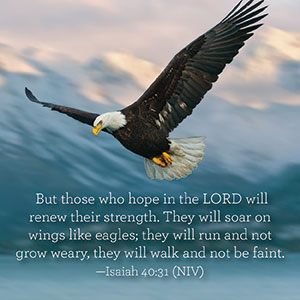
"But those who trust (wait, hope) in the Lord will find new (renew their) strength. They will soar high on wings like eagles. They will run and not grow weary. They will walk and not faint" (Isa 40:31, NLT).

References:
  1. God's Comfort Enables the Weak to Soar on Wings Like Eagles (Isaiah 40). My daily bread Dec 2010.
  2. Webb, Barry G. The Message of Isaiah. 160-167.
    • Overture (1-11),
    • Majesty (12-31): The incomparable one (12-26). Strength for the weary (27-31).
  3. Motyer, J. Alec. Isaiah. 273-283.
    • The message of comfort (1-11).
    • God the Creator, guarantor of his promises (12-31):
      • The Creator in his wisdom (12-14).
      • The Creator in his greatness (15-17).
      • The Creator in his sole deity (18-20).
      • The Creator in his role as King of kings (21-24).
      • The Creator in his direct management of the cosmos (25-26).
      • The Creator in his self-giving (27-31).

3/11/2015

The Ideal and The Reality (Isaiah 2-4)

Isaiah 2:1-4:6; 2:2

"In the last days, the mountain of the Lord's house will be the highest of all—the most important place on earth. It will be raised above the other hills, and people from all over the world will stream there to worship" (Isa 2:2, NLT). "In the last days the mountain of the Lord's temple will be established as the highest of the mountains; it will be exalted above the hills, and all nations will stream to it" (Isa 2:2, NIV). [Alternate titles could be "Glorious Hope, Painful Reality;" "Hope in the Midst of Judgment."]

Previous sermon: Despite Your Failures, Let's Meet and Talk (Isaiah 1).

Theme: Our glorious hope is that despite our utter sinfulness (Isa 1:4) and even God's people's rottenness (Isa 1:10-15), Isaiah sees a vision of the coming of the kingdom of God.

1/30/2011

God Will Create New Heavens and a New Earth (Isaiah 65)

Previous post: Do you understand your depravity--4 ways Isaiah describes our sins? (Isa 64:6)

God's Eagerness is Snubbed by His Own People, but Welcomed by Outsiders (Isa 65:1-12)

Isa 65:1,2 anticipate the drama of the book of Acts and the spread of the Gospel to the Gentiles (Acts 28:17-28; Rom 10:20,21). God is patiently pleading with his obstinate people with outstretched hands, but to no avail (John 1:11; Isa 65:3). They were not atheists but religious people who claimed God in self-righteousness, traditional formalism and hypocrisy (Isa 65:4,5; Luke 18:9-14). God could not but deal with them according to his justice and righteousness (Isa 65:6,7,11,12), while preserving a remnant (Isa 65:8-10).

The Joy of the True People of God in their Eternal Home (Isa 65:13-25)

After excluding the outwardly religious Jews, God welcomed responsive open-hearted Gentiles to their eternal home (Isa 65:13-16). Isaiah then paints a magnificent poetic picture (Isa 65:17-25), far beyond anything the world has ever seen or known, to describe the joys of the world to come, the "new heavens and a new earth" (Isa 65:17, 66:22; 2 Pet 3:13; Rev 21:1), which will be fulfilled by the 2nd Coming of Christ. This invites all believers to yearn for that day, while playing our role as the story unfolds to its glorious end (Isa 2:5).

Practical Application: What is your ultimate hope? To get what you want now? Or to wait and renew our hope in the Lord (Isa 40:31)?

Food for Thought: There is no such thing for a believer as having his/her best life now, for the best is yet to come.


Posted via email from benjamintoh's posterous

12/30/2010

God's Comfort Enables the Weak to Soar on Wings Like Eagles (Isaiah 40)

The prophesies of ch. 1-39 addressed Judah in her situation during Isaiah's ministry (739 B.C. - 686 B.C.). The prophesies of ch. 40-66, delivered more than a century and a half beforehand, address Judah as though the prophesied Babylonian captivity (Isa 39:5-7) were already a present reality, though the captivity did not begin until 605-586 B.C.

Isaiah also predicted Israel's immediate deliverance from Babylon by Cyrus (Isa 44:24-45:13), the coming of the suffering Christ to save them from their sins (Isa 42:1-7; 49:1-13; 50:4-11; 52:13-53:12), and Israel's final salvation in the last days (Isa 51:6).

Isa 40:1-31 is God's comfort throug h his promise of hope for the brokenhearted people of God on account of their rebellion.

Despite her Sins, God Tenderly Comforts his People (Isa 40:1-26)

Though we have become like a brazen wilderness landscape on account of our sins, God tenderly aims to win our hearts back (Isa 40:1-4). God does this not just for us, but primarily to reveal his own glory to the whole world (Isa 40:5). Despite man's frailty and unreliability (Isa 40:6-8), God himself will fulfill this by his word, by his kingly might, and with the heart of a gentle shepherd (Isa 40:8,10). No opposition can thwart God from keeping his promise, for God is the Creator of all things (Isa 40:12-26), and thus incomparable in his power (Isa 40:12), wisdom (Isa 40:13,14), immensity (Isa 40:15-17), sovereignty (Isa 40:21-23), and authority (Isa 40:25). Only Israel's God is worthy of worship, for he created, controls, and preserves what the pagans foolishly worship (Isa 40:18-20).

Even the Weakest can Soar on Wings like Eagles (Isa 40:27-31)

Despondency easily arises when one is exiled on account of our sins (Isa 40:27). But God never suffers setbacks because he is the everlasting God (Isa 40:28), while human strength at its best inevitably fails (Isa 40:29,30). Real power comes only from "those who hope in the Lord" (Isa 40:31).

Practical Application/Ministry Implication: If we feel overwhelmed by the immensity of our own adverse situation, may we see that God, as the Almighty Creator, is always in complete control, so much so that not even one star is ever missing or misplaced (Isa 40:26). [There are > 400 billion stars in the Milky Way galaxy, and there are 125 billion galaxies in the universe with 10 billion trillion stars.]

Great Encouragement: Even the weakest can soar like an eagle (Isa 40:31).


Posted via email from benjamintoh's posterous

11/06/2010

Forward or Destruction; No Third Option (Heb. 6)

The Doctrine of Perseverance (Heb. 6:1-12). Heb. 6:1 says, "...let us...go on to maturity." To do so, we should "leave the elementary doctrine (teaching) of Christ" (Heb. 6:1-3). Otherwise, the author warns of certain apostasy/destruction/falling away (Heb. 6:4-8). Some think this passage means that a Christian, who was once saved, can lose their salvation. That's not the case, because those whom God has truly saved will persevere in faith to the end (John 10:28,29; Rom. 8:28-30).

God's Promise is Certain (Heb. 6:13-20). "When God made a promise to Abraham" (Heb. 6:13), God had to swear by Himself, because there was no one higher than God to swear by (Heb. 6:13-18; Gen. 22:16,17). Therefore, our Christian hope is not in some vague wishful fantasy or positive thinking based on nothing, but in the Person and Saving Work of Christ, our high priest (Heb. 6:19,20). This is the only reason why we Christians are able to confidently "take hold of the hope set before us" (Heb. 6:18), and why "we have this hope as an anchor of the soul, firm and secure" (Heb. 6:19). In brief, our hope does not at all stem from ourselves, but from what Christ has done for us.


Posted via email from benjamintoh's posterous