
Showing posts with label prayer. Show all posts
Showing posts with label prayer. Show all posts
11/24/2015
(Isaiah 38)


11/23/2015
(Isaiah 37)

- Hezekiah's Prayer (37:8-20).
- God's response to Hezekiah's Prayer (37:21-38).
12/30/2014
Slandered, Opposed and Attacked (Psalm 7)

"The Lord judges the peoples; vindicate me, Lord, according to my righteousness and my integrity" (Ps 7:8, HCSB).
What do you do when you feel misunderstood, maligned and marginalized? Psalm 7 is a lament, petition and prayer by an innocent person who was slandered, opposed and attacked by those who wanted to discredit and dishonor him. Psalm 7 is titled by three different commentaries as follows:
- A Cry for Justice (Ps 7:8-10). [Derek Kidner]
- The Blessing of a Good Conscience (Ps 7:3-5, 9-10). [Alec Motyer]
- Surviving Slander (Ps 7:1-2, 6, 14; 4:2; 5:6, 9). [George Zemek]
Conscience. Despite being slandered, opposed and attacked, David checked his conscience before God (Ps 7:3-5), instead of retaliating with the spirit of vengeance and revenge.
12/22/2014
Barely Able To Pray (Psalm 6)
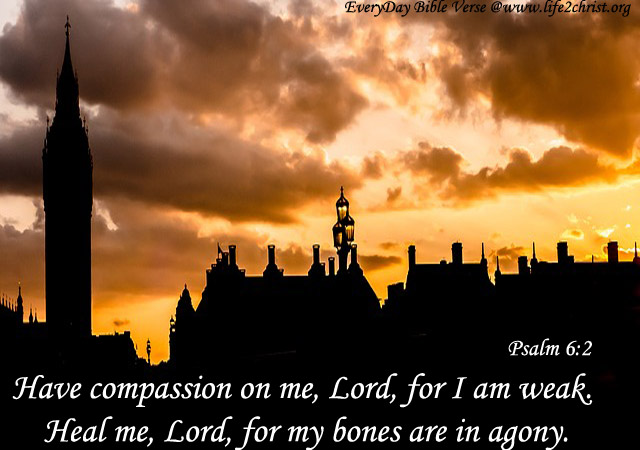
"Have compassion on me, Lord, for I am weak. Heal me, Lord, for my bones are in agony" (Ps 6:2, NLT). "...my whole being is shaken with terror" (Ps 6:3a, HCSB). "...my soul is in deep anguish" (Ps 6:3a, NIV).
- Crying in Helplessness.
- Praying in Weakness.
- Grieving Prayer.
- Agonizing Prayer.
- A Troubled Conscience.
- Feeling Helpless and Hopeless.
- Shaken by Weakness.
- Broken and Shaken.
- Overwhelmed, Yet Triumphant.
- From Defeat to Defiance.
- From Desperate Need to Great Assurance.
- From Depression to Elation.
12/19/2014
Fearless Before Many Adversaries (Psalm 3)

"I am not afraid of the thousands of people who have taken their stand against me on every side" (Ps 3:6, HCSB).
- Do you feel confident when the odds are stacked against you?
- Do you live with no fear or anxiety in your heart when you are uncertain about your future?
- Can you sleep peacefully when there are troubles all about you?
Outline of Psalm 3
|
1
|
1-2
|
Despondency: What he knows
|
Complaint: Many enemies
|
Predicament
|
|
2
|
3-4
|
Dependency: What he does
|
Confession: God is my shield
|
Prayer
|
|
3
|
5-8
|
Deliverance: What he experiences
|
Consolation: Sleep & confidence
|
Peace
|
2/21/2011
How Often Should We Pray?

What Charles Spurgeon wrote about prayer is quite "practical" in Lectures To My Students:
A very important part of our lives consists in praying in the Holy Spirit. Abundant prayer must go with earnest preaching (and Bible study). We cannot always be on our knees of the body, but the soul should never leave the posture of devotion. The habit of prayer is good, but the spirit of prayer is better. Regular retirement is to be maintained, but continued communion with God is to be our aim. As a rule, we ought never to be many minutes without actually lifting up our hearts in prayer. Some of us could honestly say that we are seldom a quarter of an hour without speaking to God, and that not as a duty but as an instinct, a habit of the new nature for which we claim no more credit than a babe does for crying after its mother. How could we not do otherwise?
Wow! Spurgeon himself said that he was seldom more than 15 min without speaking to God. Praying to follow his example:
- Do we pray every 15 min while watching a 2 hour movie, or a 30 min sitcom?
- Do we pray every 15 min when we are intensely studying, doing our homework, or working during our 8 hour work day?
- Do we pray every 15 min when chatting on social network sites?
- Do we pray every 15 min (or more frequently) when we are furiously angry with someone?
- Do we pray every 15 min when dating our spouses?
Subscribe to:
Posts (Atom)