How can anyone not love Pope Francis?
I am a sinner. During an exclusive interview in August 2013, Pope Francis was asked, "Who is Jorge Mario Bergoglio?" The pope stared in silence. The interviewer asked him if this was a question that he is allowed to ask. The pope nodded that it is, and he says, "I do not know what might be the most fitting description.... I am a sinner. This is the most accurate definition. It is not a figure of speech, a literary genre. I am a sinner."11/13/2013
Loving the Bible is like a Husband Loving His Wife's Letters
I love receiving hand written cards from my wife, even if her handwriting is often quite hard to read and decipher. Strangely, I even delight in trying to figure out what exactly did she write to me! She wrote this to me after 32 years of marriage. I can thus relate to what John Stott writes when he equates loving the Bible with loving to read my wife's written words to me:
"A man who loves his wife will love her letters and her photographs because they speak to him of her. So if we love the Lord Jesus we shall love the Bible because it speaks to us of him. The husband is not so stupid as to prefer his wife's letters to her voice, or her photographs to herself. He simply loves them because of her. So, too, we love the Bible because of Christ. It is his portrait. It is his love-letter."
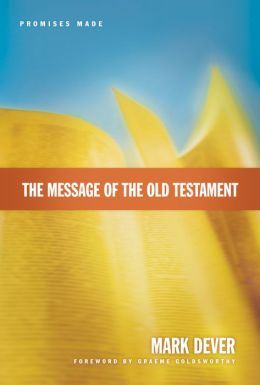
Why Study the Old Testament?
If Christ is the key to human history, the Old Testament carefully describes the lock.
If Christ is the climax of the story, the Old Testament sets the stage and begins the plot. Do you read just the endings of books?
If the New Testament presents God's promises kept, the Old Testament tells us about God's promises made.
In other words, if you don't get what the Old Testament teaches, you'll never get Christ.
11/12/2013
The Gospel in Leviticus
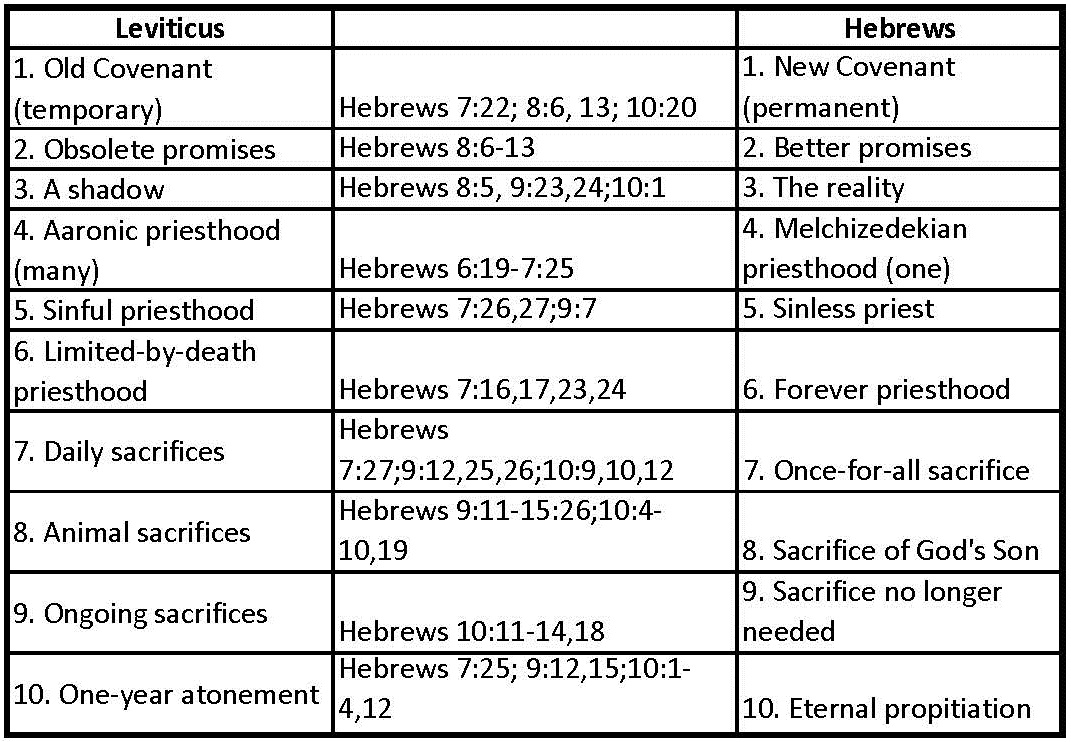
Jesus is the Great High Priest and the sin offering. It may be natural to think of Leviticus in terms of the grace of the gospel, because its ideas and concepts find their ultimate fulfillment in the person and work of Jesus--sacrificial atonement or the priesthood. Hebrews makes these connections by emphasizing again and again that Jesus is the Great High Priest (Heb 4:14; 10:21), the one without sin (Heb 9:14; 9:7), who offers himself as the ultimate sacrifice that cleanses all our sin (Heb 1:3; 7:26-27; 9:12, 14, 26, 28; 10:10, 12, 14; 13:11-12) which gives us confidence to draw near to God (Heb 10:19-22).
The Gospel in Exodus
Redemption. Exodus records the greatest redemption event in the Bible prior to Christ's incarnation. This is good news to captives who labor in bondage to sin and misery. The redemption in Exodus begins with God remembering his covenant promises offered in Genesis (Gen 3:15; 12:1-3; 15:13-14), in particular by remembering his covenant with Abraham (Ex 2:23-25), and coming to redeem his people through Moses the mediator (chs. 3-4). Central to this redemption is judgment and salvation: judgment on Egypt and salvation through the substitutionary death of spotless lambs (chs. 7-13).
Labels:
exodus,
redemption
The Gospel in Genesis
Genesis, the first book of the Pentateuch, narrates for Israel the story of people who walked with God (Enoch, Noah, Abraham, Isaac, Jacob, Joseph) to encourage their descendants to break away from their resistant and recurring hardness of heart. The foundation stories of Genesis set the stage for understanding the Gospel in many ways.
- The Creator is the King over all his creation.
- Sin entered the world and took away human freedom.
- God reveals the depth of his love and grace, despite humanity's continual disobedience.
- God called frail and profoundly flawed human beings to represent him: Noah, Abraham, Isaac, Jacob, and Joseph.
- These giants of faith learned to love God more than the goods of this life.
11/11/2013
The Meaninglessness of Wisdom, Pleasure, Possessions, Accomplishments (Eccl 1:12-2:26)
Eccl 1:1-11 poses a question: What do people gain from all their toil? The sad answer is, "Nothing." Eccl 1:12-18 asks, "What can we discover about life from using our wisdom?" Eccl 1:14 says, "I have seen all the things that are done under the sun; all of them are meaningless, a chasing after the wind."
- What was the Preacher determined to do to discover about the meaning of life (Eccl 1:12-13a)? What did he conclude (Eccl 1:13b-15; Dt 29:29)?
- What did he acknowledge about what he had attained (Eccl 1:16; 2:9)? What did he set his heart to know (Eccl 1:17a)? What conclusion did he draw (Eccl 1:17b)? Why (Eccl 1:18)?
- In the Preacher's search for meaning, what did he explore (Eccl 2:1-3)? What did he accumulate during his search (Eccl 2:4-8)? How great did he become (Eccl 2:9; 1:16)?
- What did he conclude (Eccl 2:10-11, 12-16)? How did he feel about his achievements and accomplishments (Eccl 2:17)? Why (Eccl 2:18)? Why did this trouble him (Eccl 2:19-21)?
- What was the result of one's labor, striving, and toil for things under the sun (Eccl 2:22-23)?
What did he say was the best man could achieve (Eccl 2:24a)? Who was capable of achieving this (Eccl 2:24b-26a)? What does the sinner receive (Eccl 2:26b)?
Labels:
ecclesiastes
Subscribe to:
Posts (Atom)